
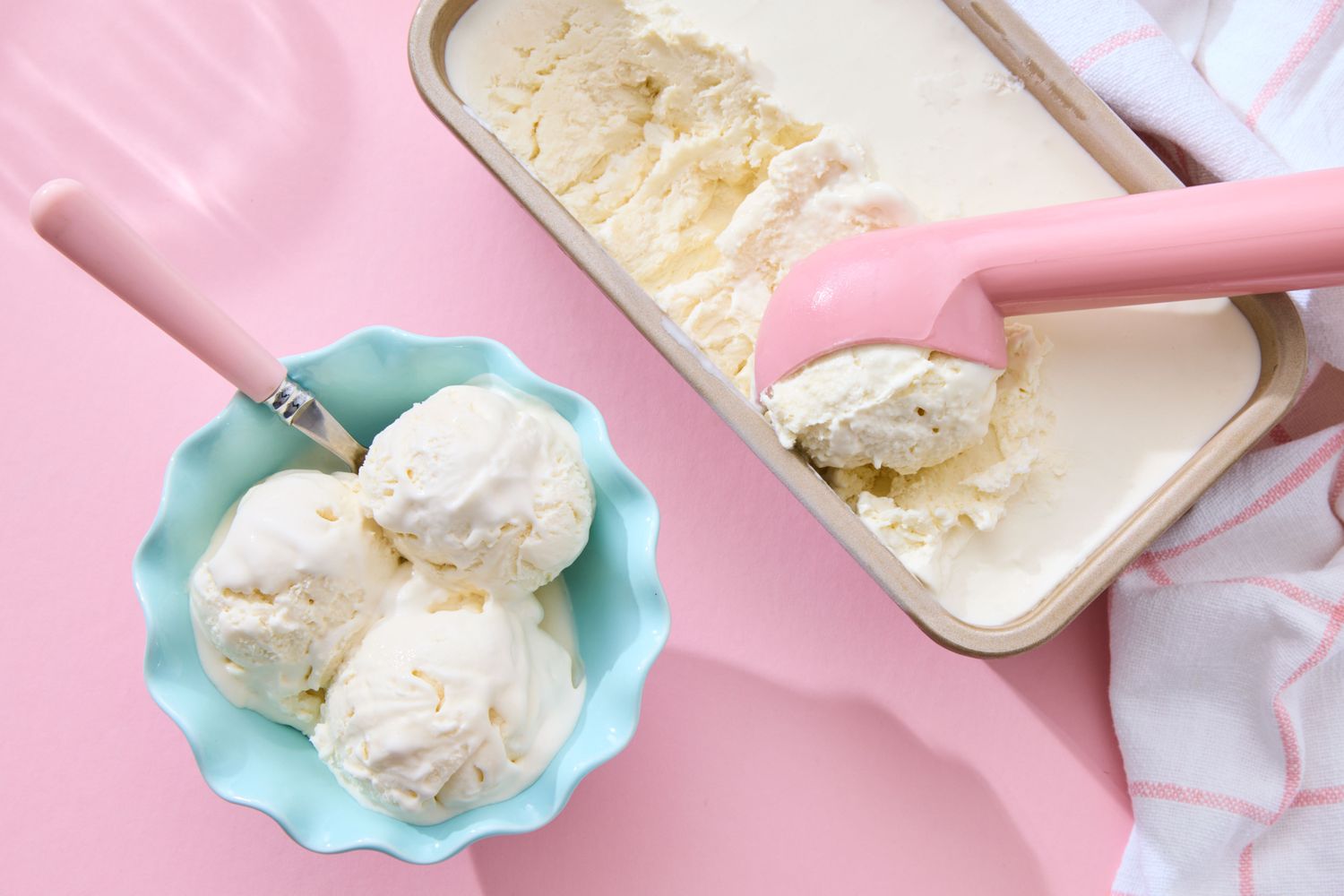
If you’re as addicted to ice cream as I am and think a dessert wouldn’t be complete without a cheeky scoop, I highly suggest attempting to make some at home. You’re in luck if you’ve always wanted to but can’t afford to spend several hundred dollars on an ice cream maker! Or perhaps you have an ice cream machine, just like me, but occasionally you can’t bring yourself to go through the entire process of preparing the anglaise. In that case, this is for you!
This Recipe is Insanely Easy To Make and Only Requires 2 ingredients:
Cream I use thickened cream, which is the finest choice. When folding through the condensed milk, I find that the thickeners in it provide a little more firmness and resistance, resulting in a softer, more aerated ice cream. But any cream that has between 30 and 40 per cent fat will work, including whipped cream and pouring cream. Condensed milk with added sugar. First and foremost, condensed milk is used to add sweetness to the ice cream. It is also utilised for a few other scientific purposes that may or may not be of interest to you. To begin with, the high sugar concentration lowers the ice cream’s freezing point, making it softer and easier to scoop right out of the freezer. The other job it does is absorb some of the liquids in the mix and boost the ratio of non-fat solids in the ice cream due to its high proportion of milk solids. This prevents the risk of large ice crystals forming and ensures the result is silky smooth and buttery.
Does 2-Ingredient ice cream taste like regular ice cream
Not entirely, but that doesn’t mean that it isn’t delicious! It’s almost like comparing white chocolate to dark chocolate… They’re similar, but also completely different, but both are so good in their own way! I find that it is a lot richer and creamier than traditional ice cream and has a distinct condensed milk flavour, which I love.
How does this ice cream work?
Conventional ice cream is somewhat of a science, requiring you to achieve the ideal ratio of fat, sugar, liquid, and non-fat particles, as well as to ensure that it is the proper thickness, hasn’t been overheated, etc. A creme anglaise, a fancy term for an egg-based custard, must first be made, heated until the yolks thicken the mixture, cooled, and then churned. Air is whisked into the mixture during churning, becoming trapped between fat globules and tiny, broken-up ice crystals. The ice cream will be lighter and easier to scoop if additional air is added. Additionally, it will melt at room temperature more quickly.
No-churn ice cream takes a shortcut on this by incorporating air into the mixture before it’s frozen, rather than during. Think of the condensed milk taking the place of the ice cream base or custard, and the whipped cream as the ice cream machine in that it gives the mixture air to produce a light, silky and scoopable texture.
So sometimes it’s nice to just make something that’s pretty much guaranteed to turn out perfectly, no matter how hard you try to ruin it (don’t actually attempt that, though).
Can I make This Recipe in an Ice Cream Churner?
Yes, you can actually! I’ve tried it both ways, and they’re both delicious. The ice cream churner approach produces a slightly denser, more luxurious ice cream. So if you have one, try it out!
Storage Instructions
Like any ice cream, 2-ingredient ice cream is best stored in a freezer-safe and airtight container. It’s a good idea to make sure the ice cream fills the container as much as possible to prevent the amount of air that can circulate.
How long will it keep in the freezer?
This ice cream will keep nicely in the freezer for 2-4 months. Although it will still be safe to eat after this time, the quality of the ice cream won’t be as good. Over time, the ice cream can go grainy and icy and take on a strange flavour. This is due to temperature fluctuations in the freezer,r which cause the ice cream to dry out and the air bubbles to shrink (which you don’t want).
Scaling The Recipe
This recipe is incredibly easy to scale and can be increased or decreased however you need (you could even make a tablespoon worth if you wanted). Because you’re not dealing with any whole ingredients like eggs, you can make as much or as little as you like.
Variations
Can I Make This Low Fat?
Although making this low-fat by no means makes it healthy, you can reduce the calories slightly if you would like. I have made this recipe before with low-fat thickened cream (18% fat compared to 35% fat), and to be honest, I hardly noticed the difference. Light cream is a LOT harder to whip than full-fat, and you won’t quite get the same firm peaks, so be prepared to put in a lot more elbow grease.
Can I Make it Without Sugar?
This is one thing you can’t really do. The sugar is really important to the texture of the ice cream, and without it, it wouldn’t be as smooth and soft. What’s more is that I don’t even think sugar-free condensed milk exists, so that’s a minor hurdle as well.
Things To Avoid
Don’t Overwhip Your Cream
Making conventional ice cream is a bit of a science; you have to make sure it’s the right thickness, hasn’t been overheated, and has the right amount of fat, sugar, liquid, and non-fat particles. An egg-based custard called a creme anglaise needs to be prepared, heated until the yolks thicken the mixture, chilled, and then stirred. During the churning process, air is whisked into the mixture and trapped between tiny, broken-up ice crystals and fat globules. Adding more air will make the ice cream lighter and simpler to scoop. It will also melt faster at normal temperature.
Avoid Water as Much as Possible
If you’re planning on adding different flavourings or mix-ins, make sure they are a concentrated and water-free as possible. If you add something watery like pureed fruit, juice or alcohol, the resulting ice cream will be icy, dense and not smooth. If you want to add fruit, try using a small amount of jam instead or cook down your fruit a little bit to evaporate some of the water before adding it in. If you’re using alcohol, do the same thing or use something concentrated like a spirit or fortified wine, rather than something like wine.