
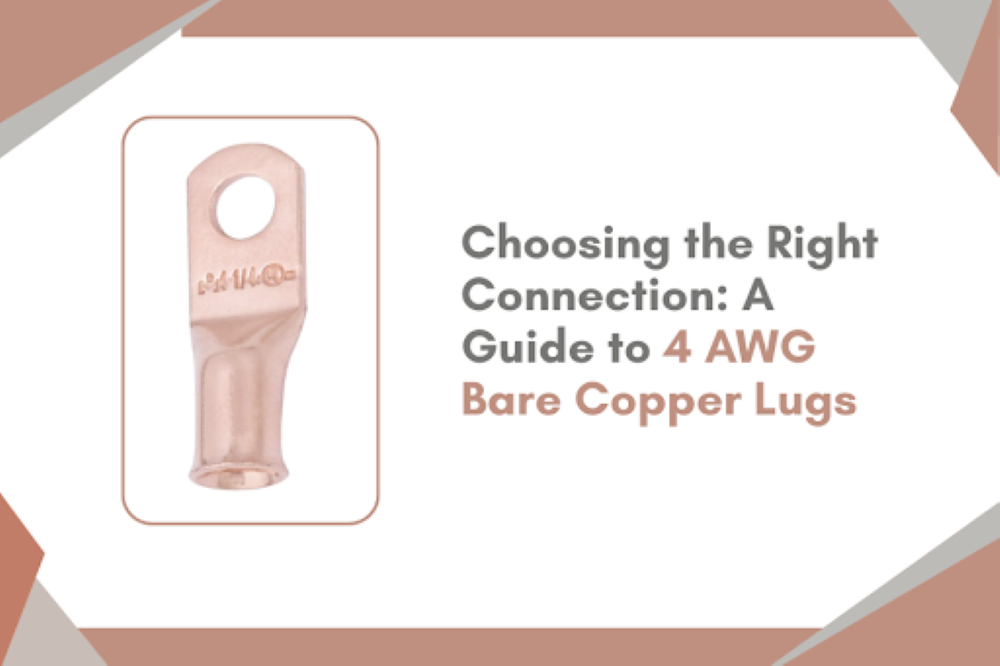
When you’re working with high-current systems, the quality of your connections matters just as much as the cable itself. A solid, clean joint keeps power flowing the way it should and protects your equipment from unnecessary strain. That’s why many installers turn to 4 gauge lugs for medium to high-amperage builds, they offer a dependable mix of strength, conductivity, and durability that works well across automotive, marine, RV, solar, and DIY electrical setups.
This guide breaks down what 4 gauge lugs (also known as 4 AWG ring lugs) are, where they perform best, and how to choose the right style for your wiring needs. It’s all about making sure your connections are as reliable as the cables feeding them.
Why 4 AWG Matters for Power Delivery
A 4 AWG cable fits that sweet spot where strength meets flexibility. It handles high loads with no trouble, but it’s still easy to work through tight areas like engine bays, battery compartments, or inverter panels.
To make the most of that performance, the connection at each end needs to be just as dependable as the cable itself. That’s where proper 4 AWG ring lugs come in. A well-matched lug ensures:
- Lower resistance
- Strong mechanical grip
- Stable conductivity
- Minimal voltage drop
- Better long-term reliability
If the lug doesn’t match the cable, the connection can become a weak link. Undersized lugs cause poor crimping, while oversized ones leave gaps that reduce contact area. Both issues create heat and long-term trouble.
What Makes Bare Copper Lugs a Smart Choice
Bare copper lugs are popular because they offer excellent conductivity and require no coating to perform well in standard environments. They’re simple, efficient, and built for clean electrical transfer.
Here’s why many users prefer them:
High conductivity
Copper is one of the most conductive metals, which helps reduce energy loss and keeps connections efficient.
Strong crimping performance
Copper lugs deform cleanly during crimping, forming a tight mechanical bond with the cable strands.
Great for indoor or controlled environments
Since they aren’t tinned, they’re best used where corrosion isn’t a big concern.
Versatility across systems
From batteries to power distribution blocks to audio upgrades, bare copper lugs fit easily into a range of setups.
If your project involves marine environments or outdoor exposure, you might prefer tinned options, but for most vehicle systems, solar builds, and workshop installations, bare copper performs exceptionally well.
Understanding 4 AWG Ring Lugs
Many users prefer 4 AWG ring lugs because the closed-loop design stays secure even when exposed to vibration. The bolt passes through the ring and locks the connection firmly, making it ideal for:
- Car audio systems
- Vehicle batteries
- RV house batteries
- Solar charge controller connections
- Industrial panels
- Power distribution systems
The ring prevents accidental pull-out and gives you a clean, stable contact area against the terminal surface.
Ring sizes vary, so always match the hole diameter to your bolt size—commonly 1/4″, 5/16″, or 3/8″. Too small, and it won’t fit. Too large, and the connection may shift or loosen.
Matching the Lug to Your Cable
To choose the right 4 AWG ring lug, focus on three key details:
1. Wire Size Compatibility
The lug should be specifically rated for 4 AWG. Anything tighter or looser affects crimp strength.
2. Stud Hole Size
Match the hole to the bolt or stud you’re connecting to. Check your battery, bus bar, or terminal block before selecting the lug.
3. Barrel Type
There are two styles:
- Standard barrel: For general wiring, low-corrosion environments, and lighter mechanical stress
- Long barrel: For heavy-duty crimping, high-vibration areas, or when you want extra strand engagement
Long-barrel lugs offer more surface area for crimping, which gives additional strength and improves current transfer.
Choosing the Right Crimp Tool
Even the best lug won’t perform well without the right crimp. A solid mechanical bond ensures the copper strands and the lug become one unified conductor.
Use tools such as:
- Hex-style crimpers for strong, professional-grade crimps
- Hammer crimpers for simple battery cable jobs
- Hydraulic crimpers for tight or high-volume work
Avoid pliers or generic hand tools. They create weak crimps that loosen over time.
When to Add Heat Shrink
Bare copper lugs don’t include insulation, so heat shrink is important for protecting the crimp and preventing corrosion. A good heat shrink:
- Adds strain relief
- Protects the copper surface
- Keeps moisture out
- Improves the overall look of the wiring
If you want the cleanest finish, use adhesive-lined heat shrink for added durability.
Where 4 AWG Ring Lugs Are Most Useful
You’ll see these 4 gauge lugs used across many applications, including:
- Car Audio Builds: They help amplifiers receive steady current without drops that affect sound quality.
- RV and Camper Systems: Ideal for connecting batteries, inverters, and distribution panels.
- Solar Installations: Reliable for mid-range current paths between batteries, controllers, and inverters.
- Automotive Repairs: Perfect for starter cables, grounds, or alternator wiring.
- DIY Workshop Projects: Useful for battery banks, power tools, and custom electrical panels.
Wherever power needs to move cleanly and consistently, well-crimped 4 gauge lugs play a major role.
Building Better Power Connections
Reliable power starts at the connection point. Selecting the right 4 gauge lugs ensures your system stays efficient, stable, and protected from avoidable issues. From vehicle audio to RV circuits to solar power banks, the right lug plays a major role in consistent performance.
If you’re looking for high-quality options you can count on, explore Selterm’s full range of 4 AWG ring lugs, built for solid conductivity and long-lasting strength.